ROV Self Sealing Mono Couplings
Individual Self-Sealing Hydraulic Couplings for ROV Make and Break
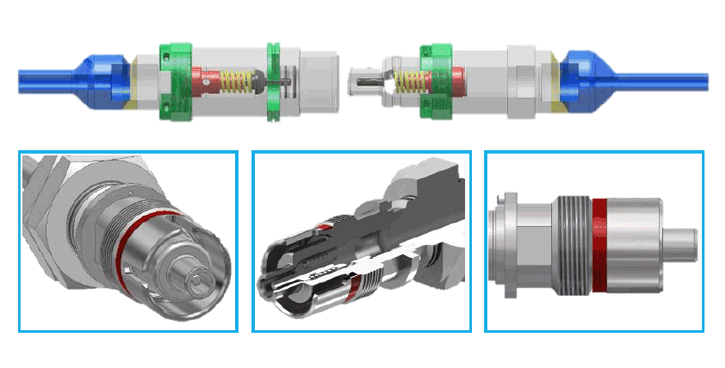
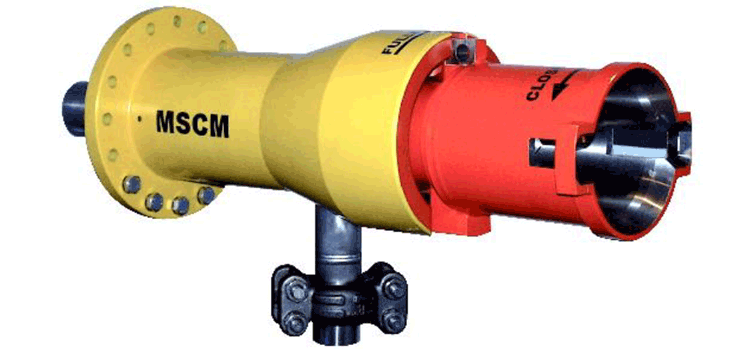
Individual male and female self sealing hydraulic couplings which allow deployment and intervention using a work class free flying ROV. The male fixed coupling attaches to the subsea structure and is self sealing with a metal poppet, while the female free coupling carries a self-sealing metal poppet with dual resilient seals on the retrievable half.
Working Pressure
Connector Type
Each coupling is supplied as an independent self-sealing pair: the male fixed half is mounted to the subsea structure and seals on a metal poppet, while the female free half carries a self-sealing metal poppet with dual resilient seals on the retrievable side. Both are designed for system pressure make and break by ROV, with seal selection driven by the chemical and fluid types in service.
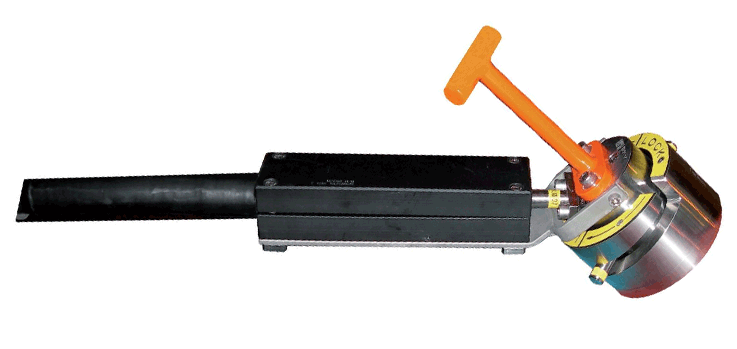
The couplings are rated to a maximum working pressure of 690 BAR (10000 PSI) over a ⅜” (9.52mm) nominal bore, with a make-up force of 150N spring force and a seawater break-open pressure of 15 BAR. A coated ROV handle aids visibility and durability subsea, and a carrier frame, parking receptacles and long term dummies support handling and stowage of couplings not in use.
The same base design can be configured to suit different ROV tooling and system requirements through a choice of T-Type, D-Type or Fishtail handles and Non-Vented, Vented or Poppetless coupling types. Seal materials available include Nitrile 90°, Elast-o-lion, Chemraz 510, Kalrez 4079, Kalrez 0090 and Viton.
Key Features
- Coated ROV handle for visibility and durability subsea
- Carrier frame for jumper
- Parking receptacles
- Long term dummies
- Handle types — T-Type, D-Type, Fishtail
- Coupling types — Non-Vented, Vented, Poppetless
- Seal materials selected to suit chemical / fluid type
Materials
Applications
- Deployment and intervention of subsea hydraulic lines using a work class free flying ROV.
- System pressure make and break of individual jumper connections by ROV.
Frequently Asked Questions
When would I use individual mono couplings instead of a stabplate?
Where a connection point carries only one or two lines, or where single jumper connections need to be made, moved or recovered independently by ROV. Once several lines share a connection point, a stabplate usually becomes more economical per make-up.
What happens to the fluid when the coupling is disconnected?
Both halves are self-sealing — the male fixed coupling seals on a metal poppet and the female free half carries a self-sealing metal poppet with dual resilient seals — keeping fluid in and seawater out during handling and stowage.
What handle and coupling options are available?
T-type, D-type and fishtail coated ROV handles to suit the tooling spread, with non-vented, vented and poppetless coupling variants, plus carrier frames, parking receptacles and long-term dummies for stowage.
What are the key ratings?
Maximum working pressure of 690 BAR (10,000 psi) over a ⅜" (9.52 mm) nominal bore, CV up to 1.9 depending on end fitting, 150 N spring make-up force and a 15 BAR seawater break-open pressure.
Which seal materials can be specified?
Seal materials are selected to suit the chemical or fluid type — options include Nitrile 90°, Elast-o-lion, Chemraz 510, Kalrez 4079, Kalrez 0090 and Viton.