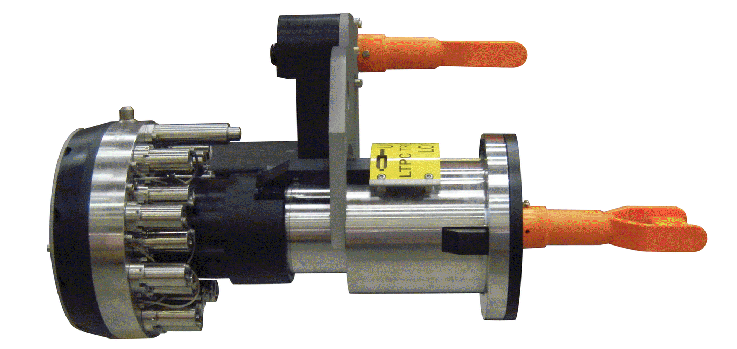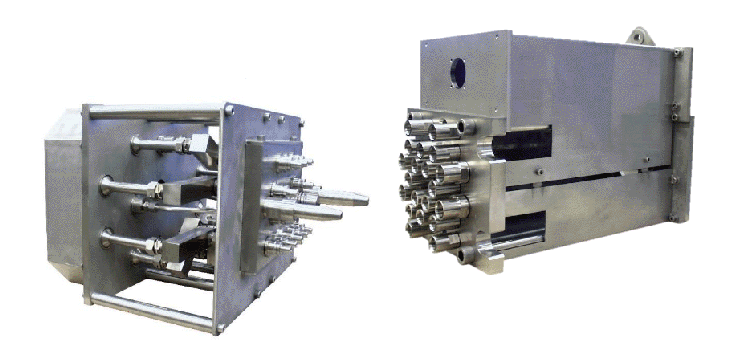
Diver Stabplate Assemblies
Diver-Mateable MQC Stabplate Assemblies
Diver mateable multiple quick connect (MQC) stabplates are designed to be integrated to a HFL. The plate is designed in two mating halves to be operated by personnel, with an outboard plate terminating to the flying lead and an inboard plate on the topside/subsea hardware.
Working Pressure
Connector Type
Diver mateable multiple quick connect (MQC) stabplates are designed to be integrated to a hydraulic flying lead (HFL). Each assembly is built in two mating halves operated by personnel: an outboard plate terminating to the flying lead, and an inboard plate mounted on topside or subsea hardware. Locking options and swingbolt plates allow the assembly to be configured for a range of intervention methods, while integrated carrier frames keep the female plate population protected and aligned.
High population options provide a coupling capacity of up to 40 way, with mate and de-mate possible under full working pressure of up to 15000 psi. Lifting points are designed and tested in accordance with DNV 2.7-3, and material certification is available to EN.10204 3.1 / 3.2. Stabplates and swingbolt nuts are manufactured from UNS S31803, with UNS C72420 / Hiduron 130 swingbolts and a Nitronic 50 HS central spigot.
Options include LTPCs, male parking plate, male and female test and flushing plates, plus any project specific requirements. A full project list is available on request.
Key Features
- Locking options
- Swingbolt plates
- High population options — capacity up to 40 way
- Integrated carrier frames for female plates
- LTPCs, parking, test and flushing plates
- Mate and de-mate under full working pressure
- Lifting points designed and tested in accordance with DNV 2.7-3
- Material certification options EN.10204 3.1 / 3.2
Materials
Applications
- Diver-operated connection of hydraulic flying leads (HFL) on subsea hardware.
- Mate and de-mate of MQC stabplate halves by personnel under full working pressure.
- Integration to topside and subsea hardware via inboard and outboard mating plates.
Frequently Asked Questions
How does a diver stabplate differ from an ROV fly-to-place plate?
The connection principle is the same — an outboard plate on the flying lead mating to an inboard plate on the hardware — but the diver variant is sized and configured for operation by personnel, with locking options such as swingbolt plates in place of the ROV torque-tool lockdown.
How many couplings can one plate carry?
High population options provide capacity up to 40 way — the highest in the MSCM stabplate range — in various coupling sizes.
Can it be connected with the system live?
Yes — mate and de-mate under full working pressure, up to 15,000 psi, qualified to ISO 13628-6/7/8 with a 30-year design life.
What ancillary plates are available?
Long-term protective covers (LTPCs), male parking plates, male and female test and flushing plates, and integrated carrier frames that keep the female plate population protected and aligned — plus any project-specific plates.
What materials and certification are used?
Stabplates and swingbolt nuts in UNS S31803 duplex, swingbolts in UNS C72420 / Hiduron 130 and a Nitronic 50 HS central spigot, with material certification available to EN 10204 3.1/3.2 and lifting points to DNV 2.7-3.