Hydraulic Couplings
Low-Force Self-Sealing Couplings
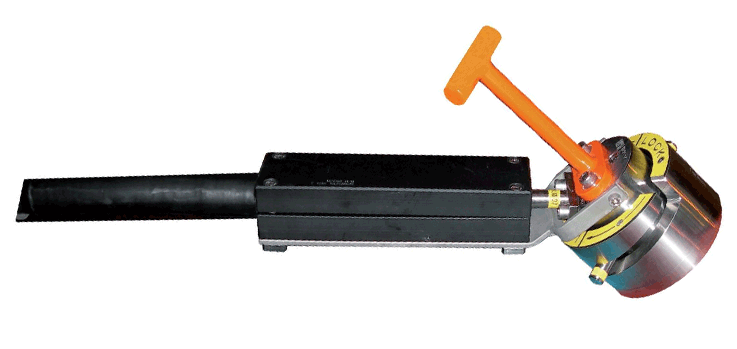
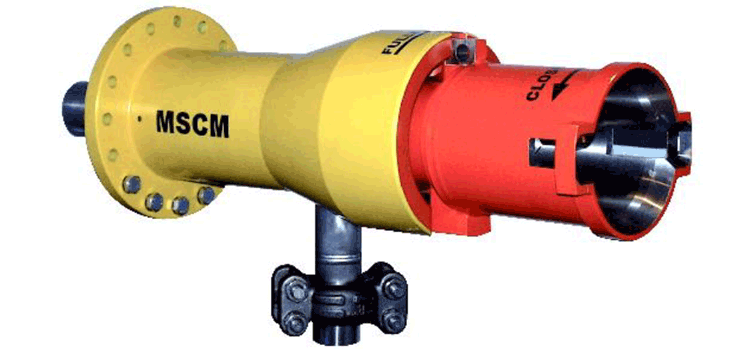
MSCM's coupling design is based upon a low force principle which results in a much reduced make-up and separation force when compared to alternative couplings. The range spans Diver Mateable, Quick Release and Stabplate Low Force variants for hydraulic and chemical distribution.
Working Pressure
Connector Type
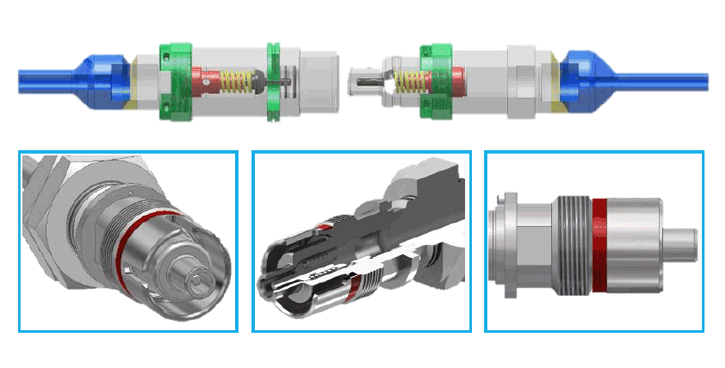
MSCM hydraulic couplings are built on a low-force principle: the geometry dictates a low separation force, which allows stabplates to be densely populated and packs a greater number of lines into a smaller area while delivering higher flow rates. All variants can make and break under full system pressure, with working pressures up to 15,000 psi and higher CV values than comparable units — CV 1.0, 1.9 and 5.5 across the ¼”, ⅜” and ¾” sizes respectively.
Diver mateable couplings are supplied as both universal and uniquely keyed, with a visible coloured band that prevents cross connection between differing function lines such as LP, HP, return and methanol chemical. The male bulkhead-mounted coupling carries a freely rotating location ring with machined slots, while the female coupling on the distribution hose jumper has two opposing pins that only engage slots of the matching keying angle. Key codes run from 36° (yellow) through 180° (green), plus a universal option.
Sealing is by dual resilient seals in the retrievable (female) couplings, with a direct metal sealing option between the internal body and poppet. Because the male fixed couplings contain no seals, wear parts live entirely in the retrievable half, and chemical-resistant seal options are available where service-fluid compatibility is a concern.
Key Features
- Higher CV value than comparable units available on the market
- Working pressure up to 15,000 psi (see table)
- Make and break under full system pressure
- Direct metal sealing between the internal body and poppet
- Male fixed couplings contain no seals
- Dual resilient seals in retrievable couplings
- Chemical resistant seal options
- Manufactured in house for shorter delivery and quality control
Materials
Applications
- Dense stabplate populations for hydraulic distribution, making and breaking under full system pressure.
- Diver-mateable distribution lines uniquely keyed and colour coded to prevent cross connection.
- Quick release connections for topside, workover and Christmas tree equipment.
Frequently Asked Questions
What pressure ratings are available?
Working pressures up to 15,000 psi. The ¼" and ⅜" couplings are rated to 1,138 BAR design working pressure and the ¾" to 759 BAR, with CV values of 1.0, 1.9 and 5.5 respectively — higher flow than comparable units on the market.
Which coupling type do I need — diver mateable, quick release or stabplate?
Diver mateable couplings suit diver-installed distribution lines and can be uniquely keyed and colour coded. Quick release couplings are for topside, workover and Christmas tree equipment. Stabplate low-force couplings are self-sealing male/female pairs designed for dense multi-line stabplate populations. All make and break under full system pressure.
How does the keying system prevent cross-connection?
Each diver-mateable coupling can be supplied with a unique keying angle and matching visible colour band — from 36° (yellow) to 180° (green), plus a universal option. Location slots and pins physically prevent connection unless the keying angles match, so HP, LP, return and chemical lines cannot be cross-connected.
What seal and material options are offered?
Couplings seal metal-to-metal between the internal body and poppet; male fixed couplings contain no seals, and retrievable couplings carry dual resilient seals with chemical-resistant options for methanol and other service fluids. Bodies are Nitronic 50 HS with adaptors in Nitronic 50 HS or UNS S32750 and tubing options including 316L, UNS S32750, Inconel 625 and 6Mo.
Why does the low-force design matter?
A low make-up and separation force allows more couplings to be packed into a single stabplate at high pressure — more lines in a smaller area, greater flow rates and easier mating, without compromising sealing integrity.