Technical Guide · 11 June 2026
How to Choose the Right Pressure Rating for a Subsea Hydraulic Coupling
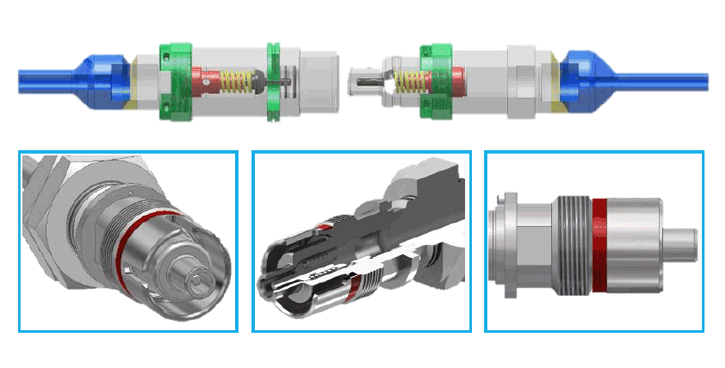
Sample article. This guide is a starting point for MSCM’s technical content library, written from publicly available product specifications. It should be reviewed and expanded by MSCM’s engineering team before being treated as formal technical guidance.
Selecting the correct pressure rating for a subsea hydraulic coupling is one of the first decisions in any distribution system design — get it wrong and you’re either over-engineering (and over-paying for) the connection, or leaving no margin for system surges and future tie-backs.
Start with your system design pressure, not your operating pressure
Couplings should be specified against the maximum design pressure of the hydraulic system, including any allowance for surge or thermal expansion — not the steady-state operating pressure. Most subsea control and chemical injection systems are designed around standard pressure classes such as 5,000 psi, 10,000 psi or 15,000 psi.
MSCM’s hydraulic couplings are available up to 15,000 psi (1035 BAR) design pressure on the ¼” and ⅜” sizes, with ¾” couplings rated to 690 BAR. If your system design pressure sits close to a class boundary, it’s worth speaking to our engineering team early — coupling size, seal configuration and body material can all be tuned to the application.
Match the coupling type to how it will be mated
The right coupling type depends as much on how the connection will be made as on the pressure itself:
- Stabplate low-force couplings — designed for dense stabplate populations where multiple couplings must make up simultaneously under full system pressure with minimal stab force.
- Diver-mateable couplings — dual resilient seal designs with keying and colour-coding, intended for manual make/break by divers or ROV manipulators.
- ROV self-sealing mono-couplings — single-line couplings optimised for ROV tooling, typically used where a diver-mateable interface isn’t practical.
- Quick-release couplings for topside and workover — used on Christmas tree and workover equipment where rapid disconnect is required.
Don’t overlook materials and water depth
Water depth drives material selection as much as it drives pressure. MSCM couplings are available with bodies in Nitronic 50 HS and adaptors/tubing in Nitronic 50 HS, UNS S32750 (super duplex), 316L stainless steel and Inconel 625 6Mo — material combinations that are selected for corrosion resistance and mechanical performance at depths up to 3,000 metres.
As a rule of thumb:
- Confirm your system design pressure and apply any required surge margin.
- Identify how the connection will be made (stabplate, diver, ROV, or topside quick-release).
- Check water depth and service fluid against the available material combinations.
- Confirm cycle life requirements — MSCM couplings are qualified for a minimum of 50 make/break cycles under full pressure.
Get a second opinion before you finalise the spec
Every field layout has its own quirks — tie-back distances, co-mingled chemical and hydraulic lines, retrofit constraints on existing manifolds. MSCM’s engineering team can review your proposed coupling schedule against your P&IDs and flag anything that needs a closer look.